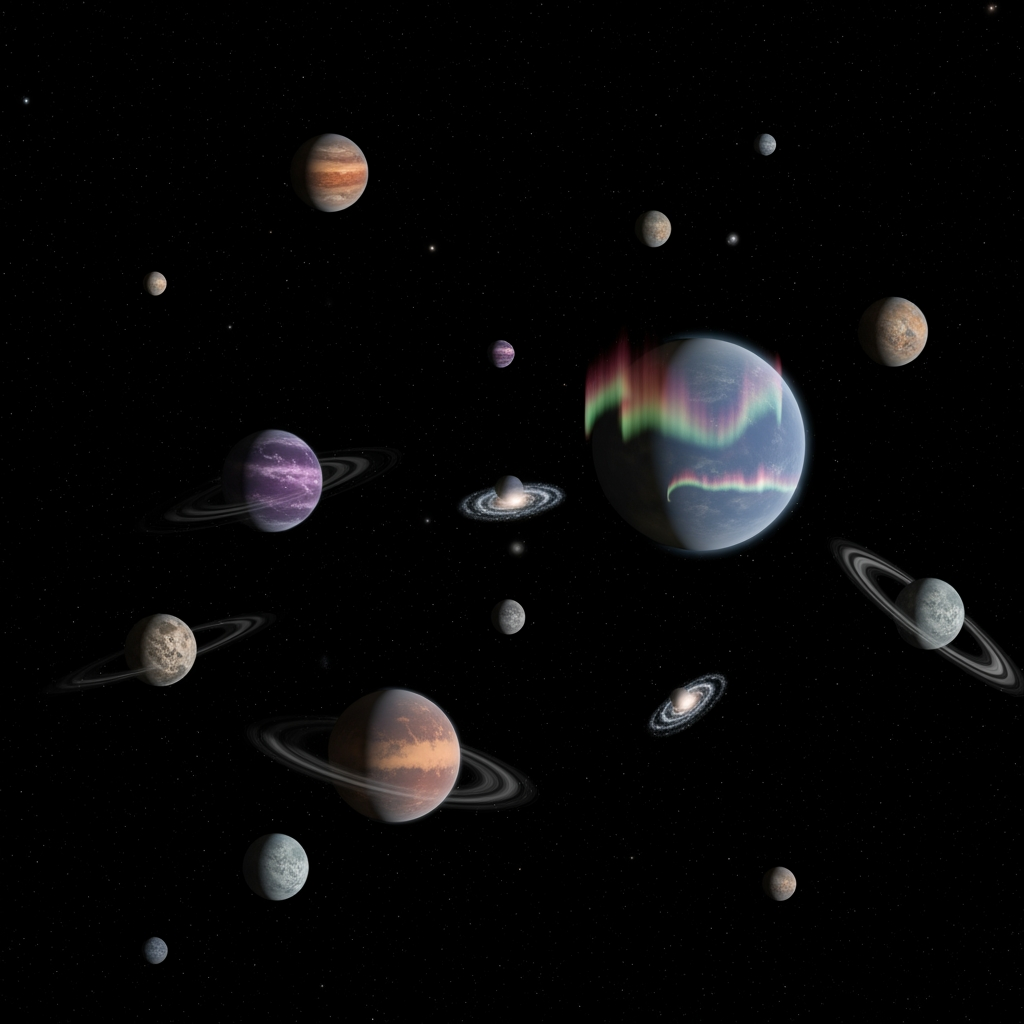
Our galaxy contains billions of "rogue planets"—worlds that drift through interstellar space without orbiting any star. These cosmic wanderers are far more common than astronomers expected.
How Rogue Planets Form
Some were ejected from their solar systems through gravitational interactions. Others may have formed directly from collapsing gas clouds, like stars but without enough mass to ignite fusion. A few might be captured by stars and become "normal" planets.
Could Life Exist?
Without starlight, rogue planets are dark and cold on the surface. But internal heat from radioactive decay could maintain liquid water beneath thick ice shells. Some theorists speculate that life could exist in such subsurface oceans, warmed from below rather than above.
Detecting rogue planets is challenging because they emit no light, but gravitational microlensing surveys are finding them in increasing numbers.
This article was generated by AI to provide informational content.