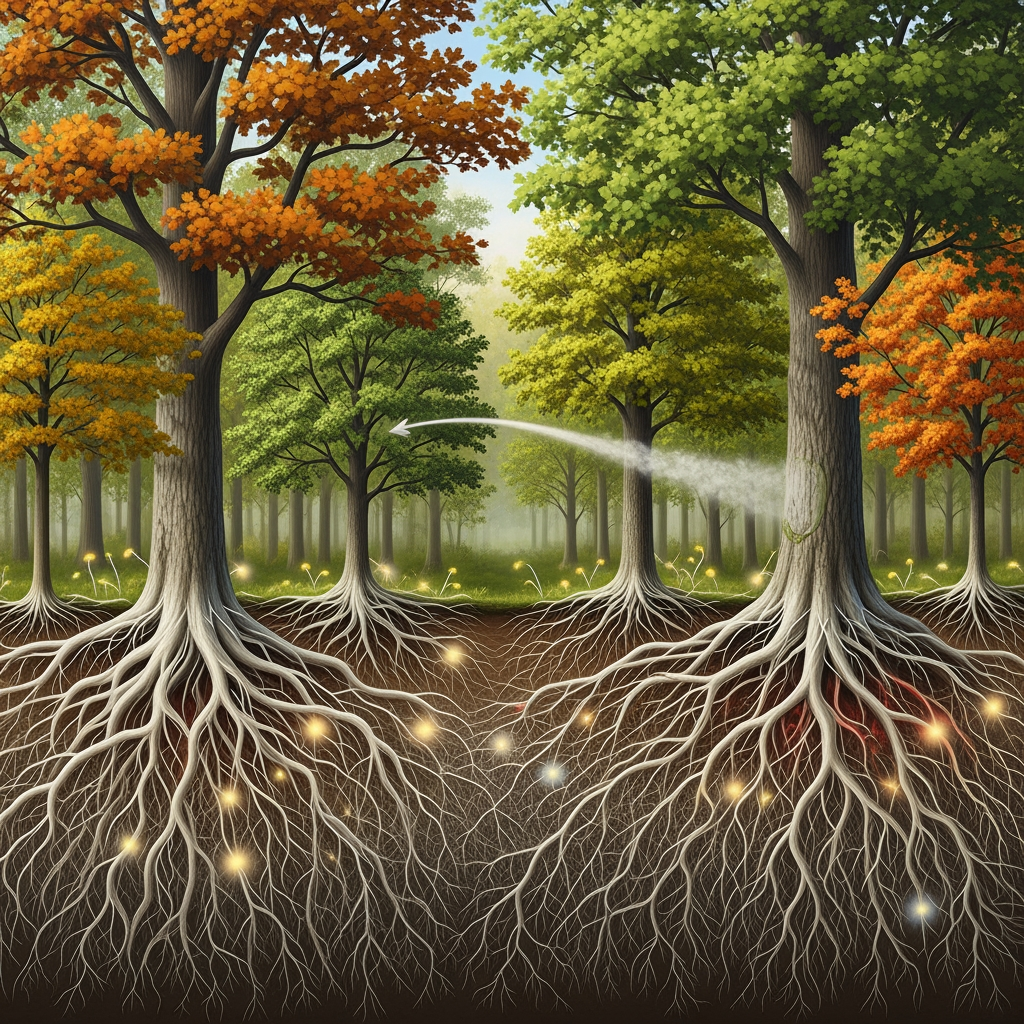
Forests are not just collections of individual trees but interconnected networks where plants share resources and information. This "wood wide web" is transforming how we understand forest ecology.
Underground Networks
Trees form partnerships with fungi, whose thread-like filaments connect root systems across the forest floor. Through these networks, trees share carbon, water, and nutrients. Mother trees have been shown to preferentially support their offspring, sending them extra resources.
Chemical Communication
Trees also communicate above ground through airborne chemicals. When attacked by insects, some species release compounds that warn neighboring trees, which then produce defensive chemicals before the pests arrive. Some even signal to beneficial insects that prey on their attackers.
This research has practical implications for forestry and conservation, suggesting that clear-cutting disrupts vital communication networks and that maintaining diverse, connected forests is essential for ecosystem health.
This article was generated by AI to provide informational content.