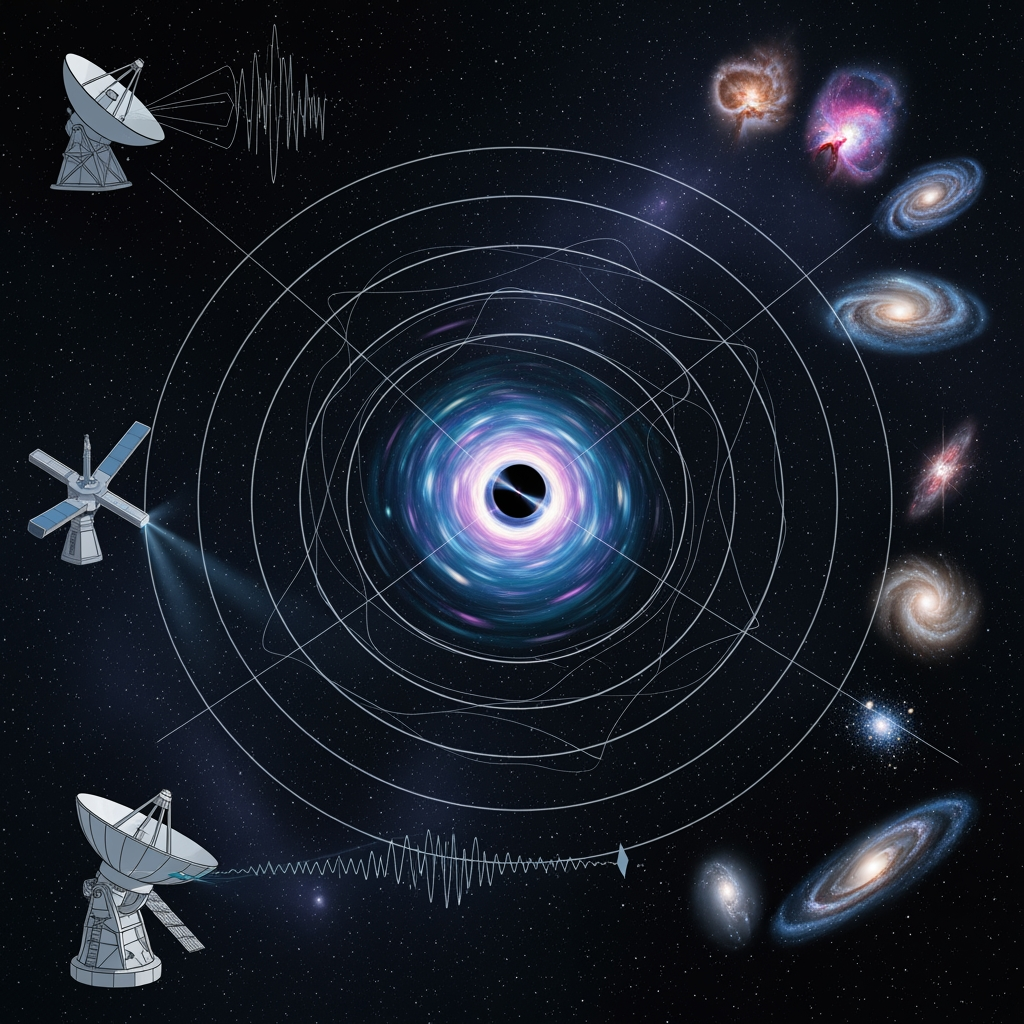
Since the first detection in 2015, gravitational wave observatories have registered over 90 cosmic collisions—events invisible to traditional telescopes. This new form of astronomy is unveiling phenomena we couldn't observe before.
What We're Detecting
Most detections involve black holes merging, but neutron star collisions have also been observed. These events release more energy in seconds than our sun will emit in its entire lifetime, causing ripples in spacetime that wash over Earth.
Future Capabilities
Planned upgrades will make current detectors more sensitive. Space-based observatories like LISA will detect different types of gravitational waves, including those from supermassive black holes at galactic centers. A network of timing arrays using pulsars may have already detected the background hum of gravitational waves pervading the universe.
This new window on the cosmos has already yielded surprises and will likely reveal phenomena we haven't imagined.
This article was generated by AI to provide informational content.