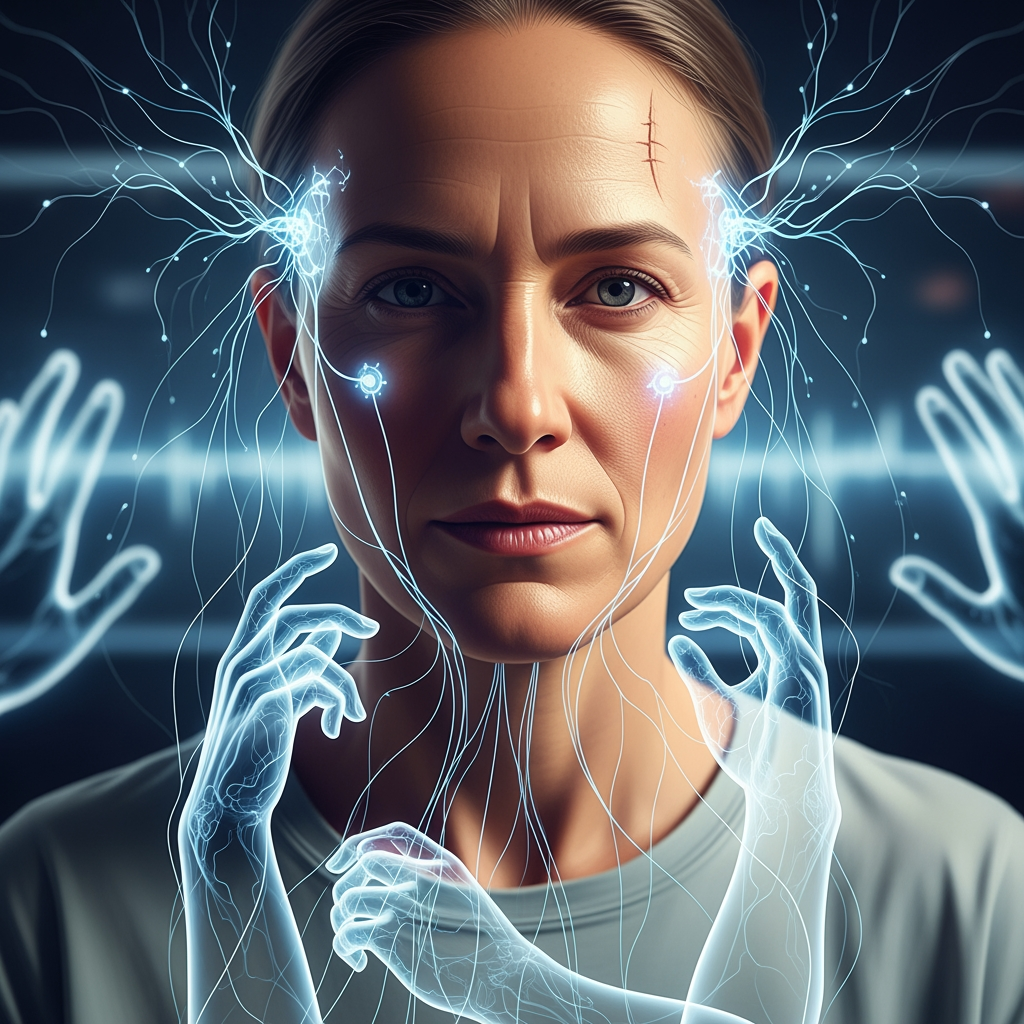
Recent advances in brain-computer interface (BCI) technology have enabled paralyzed individuals to control robotic limbs, computer cursors, and even their own muscles using only their thoughts.
How BCIs Work
Tiny electrodes implanted in the brain's motor cortex detect neural signals associated with intended movements. These signals are decoded by sophisticated algorithms and translated into commands for external devices or electrical stimulators that activate the patient's own muscles.
Recent Breakthroughs
Patients in clinical trials have regained the ability to feed themselves, write, and even walk short distances with assistance. The speed and accuracy of these systems have improved dramatically in recent years, approaching natural movement in some cases.
Researchers are now working on bidirectional interfaces that not only send commands but also provide sensory feedback, giving users a sense of touch.
This article was generated by AI to provide informational content.