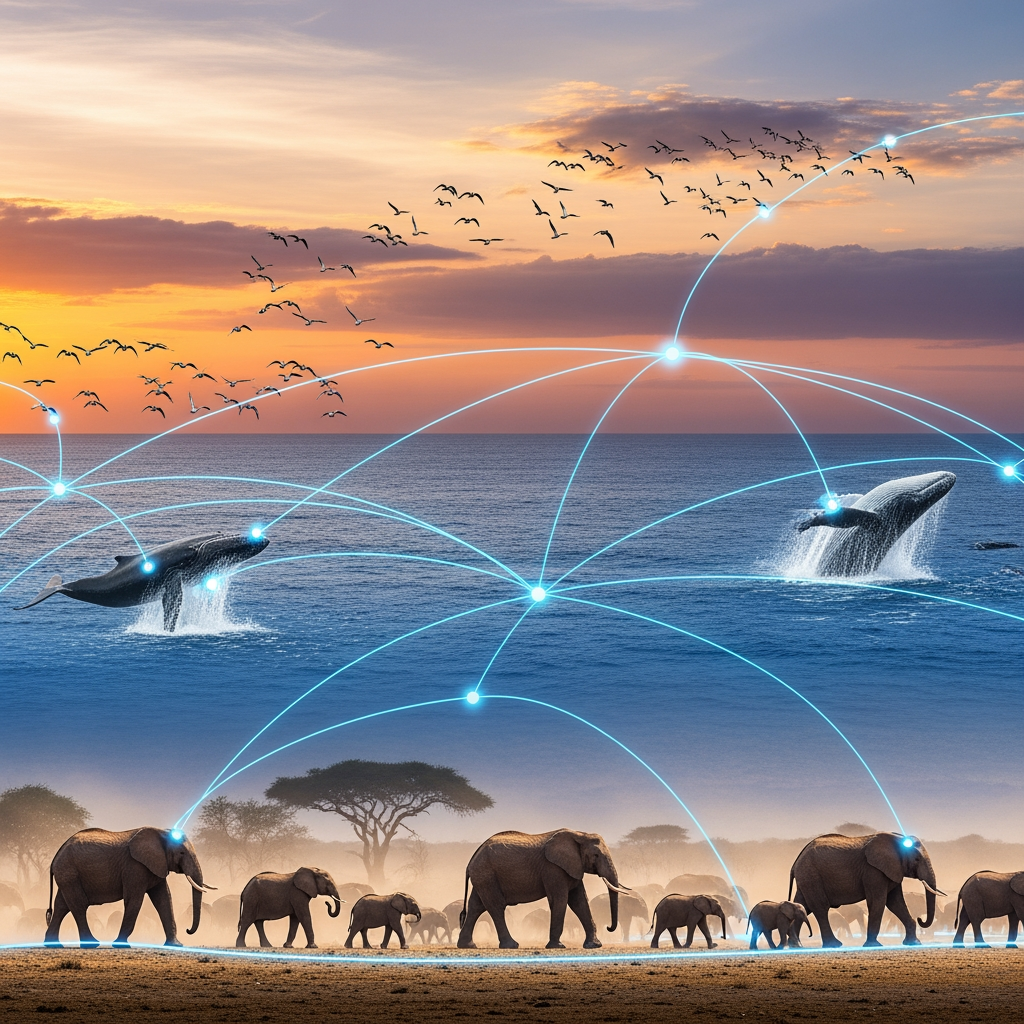
Miniaturized tracking devices have revolutionized our understanding of animal migration. Scientists can now follow creatures as small as songbirds across continents, revealing journeys of almost unimaginable endurance.
Remarkable Journeys
Arctic terns fly from pole to pole annually—a round trip of 44,000 miles. Bar-tailed godwits cross the Pacific Ocean nonstop, flying 7,000 miles without rest or food. Tiny warblers navigate using Earth's magnetic field and star patterns.
Conservation Implications
Understanding migration routes helps identify critical stopover sites where birds rest and refuel. Protecting these waypoints is often more important than protecting breeding or wintering grounds alone.
Tracking data has revealed that many species are shifting their migration timing in response to climate change, sometimes putting them out of sync with their food sources.
This article was generated by AI to provide informational content.